
It’s always great to find a way to reduce costs and speed up production without compromising quality.
What if you at could save your valuable time and money by eliminating the need to pre-tap for standard screws, or stop fretting over difficult Saradnja material that won’t easily allow thread-forming?
This might be a great opportunity for you to consider using thread-cutting screws.
These fasteners cut a reliable mating thread with little more than 7ã¤ã®å–り組㿠a simple pilot hole – and since they don’t deform their own threads they remain reliable during service.
Below you’ll find our guide to the various types of thread-cutting screws and their applications. Aspen’s Experts can tell you if you can benefit from their unique features – Washington Redskins Jerseys and of course we’re always ready to answer your questions.
Thread Cutting Screws
Definition
· A type of screw that has a cutting point and Introducing edges that produces a mating thread by removing material from the engaged section
Advantages
· Creates a perfectly formed mating thread, allowing a stronger joint
· No need for a separate tapping operation
· Reusable
Standard Types
· Thread-cutting screws come in a variety of head styles, drive types, materials and platings.
· The threading and point differentiate the types, with types 1, F, 23 and 25 being the most common.
· Please note that for this reason, only the screw shaft is illustrated.
Simply click on the images or links below to see the head/drive options available.
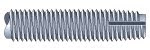
A Machine Screw thread with a blunt point and single cutting edge for general use. Produces a fine standard machine screw thread for field replacement. May be used in sheet metals, structural shapes, alloys and plastics
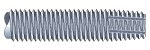
A Machine Screw thread with a blunt point, and multiple cutting edges. Fun May be used in heavy gauge sheet metal, Fasteners aluminum, zinc and lead die castings, cast iron, brass and plastic.
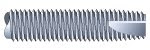
A Machine Screw thread with a blunt point, tapered entering threads and a single wide cutting edge with a chip cheap mlb jerseys cavity. May be used in cast iron, zinc and aluminum die castings and cheap mlb jerseys plasics. Provides maximum thread cutting area and excellent chip clearing, with minimum tightening torques.

A Coarse Type cheap nba jerseys B thread with a blunt point, tapered entering threads and a single wide cutting edge dolore with chip cavity. For plastics and other soft materials with large chip clearing and cutting edges.